luckysstrike:
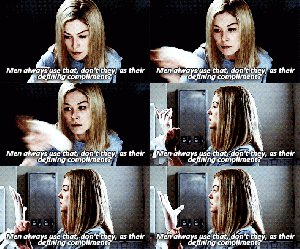
“Amy’s “Cool Girl” monologue makes explicit the film’s central critique of contemporary identity. We allow ourselves to appear shallow on the surface because other people like us that way. More importantly, we do it because we have our safe refuge on the inside where we can say to ourselves, “that’s not the real me.” We “endure” subjugating our own desires to the desires of others because we believe in this refuge, but the reality is that we’re allowing our identities to be determined by someone else’s desire. There’s a fine line between compromise and self-effacement, and Amy’s critique of modern society is that we allow ourselves to be erased and replaced with someone—something—else. We are exactly what we pretend to be. The distinction between external appearances and internal reality exists so that we can maintain the illusion of being what we want to be while still enjoying our easy, comfortable lifestyles. Amy’s argument is that instead we should appear to be the best version of ourselves, because being our best—showing our best on the surface—erases the gap between internal and external identity. Amy kills the version of herself she created to please others and becomes the film’s paragon of self-realization. She throws away the Cool Girl and becomes the Gone Girl.” (source)

































 darknesstohislight